Breaking down on the M6 is one of the most stressful situations a driver can face. The M6 is the UK's longest motorway — stretching 232 miles from Catthorpe in the East Midlands all the way to Gretna Green on the Scottish border — and it carries over 100,000 vehicles per day through the Midlands. With that volume of traffic moving at motorway speeds, a breakdown can be genuinely dangerous if you don't know exactly what to do.
This guide covers the seven steps you must follow to stay safe, who to call for fast M6 recovery, and what to expect when the recovery truck arrives.
Every year, dozens of people are killed or seriously injured on UK motorway hard shoulders. Follow these steps exactly — your safety is more important than your car.
Step 1: Move to the Left Lane Immediately
The moment you notice something is wrong — unusual noise, warning light, loss of power, steering pulling — signal left immediately and move to the left-hand lane. Do this as calmly and safely as possible, checking mirrors before changing lanes.
Do not stop in a live lane under any circumstances. If your car is losing power quickly and you genuinely cannot make it to the hard shoulder, switch on your hazard lights immediately to warn other drivers.
Signal, mirror, move left
As soon as something feels wrong — move left. Don't wait to see if the problem gets better. Every second in a live lane increases the risk.
Step 2: Pull Onto the Hard Shoulder or Emergency Refuge Area
On the M6, look for the nearest emergency refuge area (ERA) — these are clearly signed orange refuges every 500 metres on Smart Motorway sections. On traditional sections with a hard shoulder, pull fully onto it, driving as far left as possible.
Try to stop near an orange SOS emergency telephone marker — these are located every mile and connect you directly to Highways England's control centre for free.
The M6 has several Smart Motorway sections (including around Birmingham J4–J10a) where there is no permanent hard shoulder. On these sections, the hard shoulder is only open during busy periods. Always look for emergency refuge areas — marked with blue signs with an orange 'SOS' telephone symbol.
Step 3: Switch On Hazard Lights
The moment you stop, turn on your hazard warning lights. This warns approaching traffic that you are stationary. Do not turn them off until the recovery vehicle arrives and it is safe to do so.
If you have warning triangles in your car, do NOT place them on a motorway hard shoulder — this is dangerous and not recommended by the Highway Code for motorways. Hazard lights are sufficient.
Step 4: Exit the Vehicle From the Passenger Side
This is critical. Never exit from the driver's side on a motorway — you would be stepping directly into live traffic. Open the passenger door and exit left, away from moving vehicles.
Get all passengers out of the vehicle, including pets. Leave as quickly as possible.
Exit passenger side only
Exit left, away from traffic. Get every passenger out of the vehicle immediately — including children and pets. Leave bags and belongings behind if it speeds this up.
Step 5: Stand Well Behind the Barrier
Once out of the vehicle, move up the embankment or behind the crash barrier — away from the carriageway. Stand as far from the road as possible. Do not stand between the barrier and your car.
In the event your car is struck by a passing vehicle (which happens), you want to be completely clear of the impact zone.
Even with hazard lights on, vehicles on UK motorways regularly hit stationary cars on the hard shoulder. The safest place is behind the barrier, well away from the road.
Step 6: Call for Recovery Immediately
Once you are safely behind the barrier, call for recovery. You have two options:
- Use an SOS orange phone box — free, connects directly to Highways England. They will arrange a patrol or approved recovery operator. However, this can take 45–90 minutes depending on their queue.
- Call your own recovery service — if you have a preferred recovery company, call them directly. Private recovery companies typically respond faster because they're not working through the official queue system.
We cover the full length of the M6 from Junction 1 (Catthorpe interchange) to the Midlands and beyond via our M6 recovery service. Call 07514 699169 for an immediate dispatch — average response time 15–30 minutes across the M6 Midlands corridor.
Broken Down on the M6 Right Now?
We cover the full M6 from J1 to J16 and beyond. Average arrival 15–30 minutes. Call now for immediate dispatch.
📞 Call 07514 699169 — Free QuoteStep 7: Keep Warm, Keep Visible, Stay Calm
While you wait for recovery, stay behind the barrier. If it's cold or raining, sit in the car only if you are away from the carriageway (e.g. on an elevated verge with a solid barrier between you and traffic). Keep your phone battery conserved — don't browse social media while waiting.
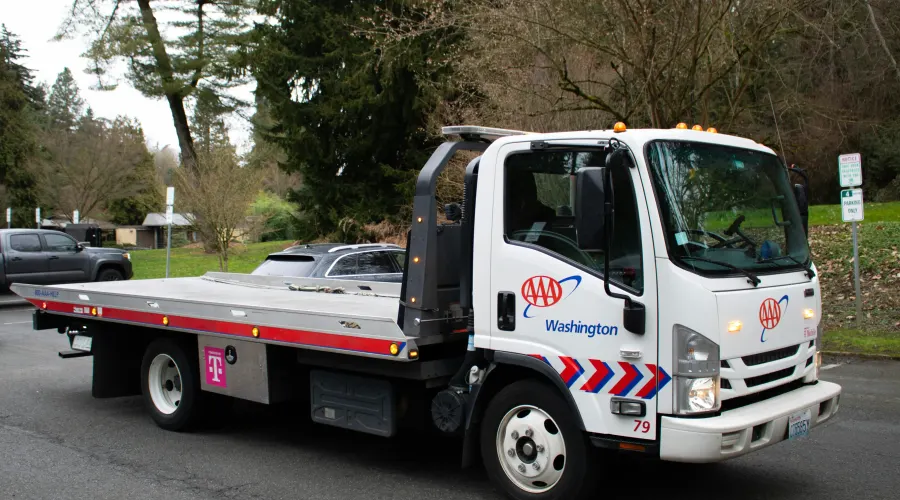
When the recovery truck arrives, the driver will assess your vehicle, confirm the recovery location and load your car safely onto the flatbed. Tell them exactly where you need to go.
Which M6 Junctions Do We Cover?
We cover the M6 from the Catthorpe Interchange (J1, where the M1 meets the M6) northward through Coventry, Birmingham, and up through Staffordshire. Key M6 sections we regularly attend include:
- M6 J1–J4: Rugby to Coventry corridor — our fastest response zone
- M6 J4–J10a: The Birmingham section including the Spaghetti Junction interchange
- M6 J10a–J13: Walsall to Cannock
- M6 J13–J16: Stafford area — still within our 30-minute average response
For breakdowns further north, call us and we'll give you an honest arrival time. We won't take your job if we can't reach you quickly enough.
What Happens When the Recovery Truck Arrives
Our recovery operators are trained in motorway safety protocols. When we arrive:
- The recovery truck will position itself behind your vehicle with its amber beacons on to create a protective buffer
- Our operator will approach you behind the barrier first and confirm your details and destination
- We'll assess your vehicle — whether it needs flatbed loading or can be towed on its wheels
- Your car is loaded or connected safely, and you travel in the recovery truck cab to your destination
- We aim to have you off the motorway within 20 minutes of arrival
Frequently Asked Questions About M6 Breakdowns
Can I push my car off the motorway?
No. Never attempt to push your car on a motorway — this is extremely dangerous. Stay in your car if it is safe, or behind the barrier if you are on the hard shoulder, and wait for professional recovery.
Will the motorway be closed if my car breaks down?
Not normally. Highways England will only close lanes or the motorway if the recovery operation requires it (e.g. a large load, fuel spillage, or dangerous position). Most breakdowns are recovered without lane closures.
Do I have to use Highways England's recovery operator?
If you call the SOS box, Highways England will dispatch an approved contractor. However, you are not obliged to use them — you can call your own recovery service instead, or ask Highways England to give you time to contact your preferred operator.
How much does M6 breakdown recovery cost?
Recovery costs vary depending on how far your car needs to be taken. We provide a fixed price before dispatching — no surprises. Call 07514 699169 for an instant free quote.